Check price

Best Air Purifiers for Allergies: Top Picks for Pollen, Pet Dander & Dust Relief

As an Amazon Associate, this site earns from qualifying purchases. That never changes which models we pick or what you pay. We don't print prices on this page because Amazon updates them constantly; the "Check price" buttons always show today's number.

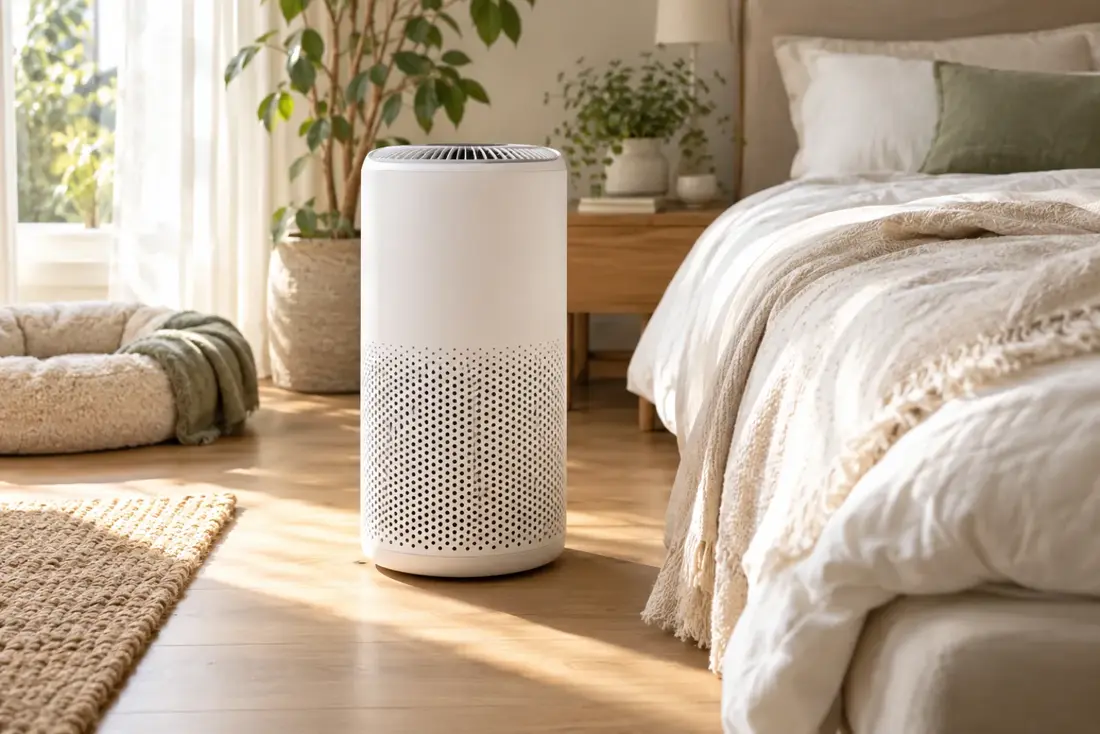
White tower-style HEPA air purifier on the floor near a bed, soft morning light, plants and a pet bed in background, calm clean home atmosphere, editorial photo
Compact white HEPA air purifier running beside a bed in a bright bedroom with an open window and spring light

Best Air Purifiers for Allergies at a Glance

Sneezing the moment you walk into your own living room usually means the trouble is floating in the air you breathe all day. The best air purifiers for allergies pull pollen, pet dander and dust out of that air with a HEPA filter, then keep doing it quietly, hour after hour. Below are seven picks, each matched to a specific room or trigger, so people with allergies can skip the spec-sheet maze and find the best fit fast.

Short answer? For most homes, the best air purifier for allergies is the Coway Airmega AP-1512HH. It pairs HEPA with a carbon layer, adjusts itself to your indoor air quality and suits a typical bedroom or living room. Need something bigger, quieter, smarter or cheaper? Scan the table and jump to your pick. Every model here is built to deliver clean air, not just stir it around.

Quick-Pick Table for People with Allergies

Our pickModelBest forPrice tierAction
Top pickCoway Airmega AP-1512HHMost bedrooms and living roomsMid-rangeCheck price
BudgetWinix 5500-2Value with a full 3-stage stackBudget to midCheck price
Small spacesLevoit Core 300Bedrooms, dorms, home officesBudgetCheck price
Big open roomsHoneywell HPA300Open-plan living areasMid-rangeCheck price
PetsBlueair Blue Pure 211i MaxMulti-pet householdsMid to premiumCheck price
SmartLevoit Core 400SLive readings and app controlMid-rangeCheck price
Quiet bedroomBlueair Blue Pure 411i MaxLight sleepersBudget to midCheck price
Check price

Amazon prices move daily. A quick look at today's price and stock takes ten seconds.

How an Air Purifier Can Help Allergy Sufferers

You'd think home is the safe zone. It often isn't. Seasonal grains ride in on clothes, shoes and open windows, so outdoor air quietly becomes indoor air. Pets shed dander all day. Dust gets kicked up every time someone crosses a rug. And because the EPA estimates Americans spend roughly 90% of their time indoors, the air in your home is the air your immune system argues with most.

Those triggers are tiny particulate matter. Dander and mold spores can hang in a room for hours, which is exactly why a fan-driven unit works on them: filtering air continuously means the same air passes through again and again, losing a little more of its load each pass. That's how purifiers help reduce the airborne irritants that set off sneezing, itchy eyes and, for people with asthma, tighter breathing.

Be clear about limits, too. A purifier only touches what's airborne. It won't clean your mattress or wash the dog. For allergy sufferers, an air purifier can help most when it's paired with basic habits like closed windows on high-count days and regular vacuuming.

The Link Between Clean Air and Allergy Relief

Fewer particles in the air means fewer landing in your nose and lungs. It's that simple. Research on HEPA units shows the clearest benefit for people who suffer from allergies to pets and dust, with the biggest gains when the machine runs nonstop in the bedroom, where you spend a third of your day.

So the real job of an air purifier to help with symptoms is consistency: steady cleaning that keeps allergens in the air from building back up. Choose one sized for your room and you're most of the way there.

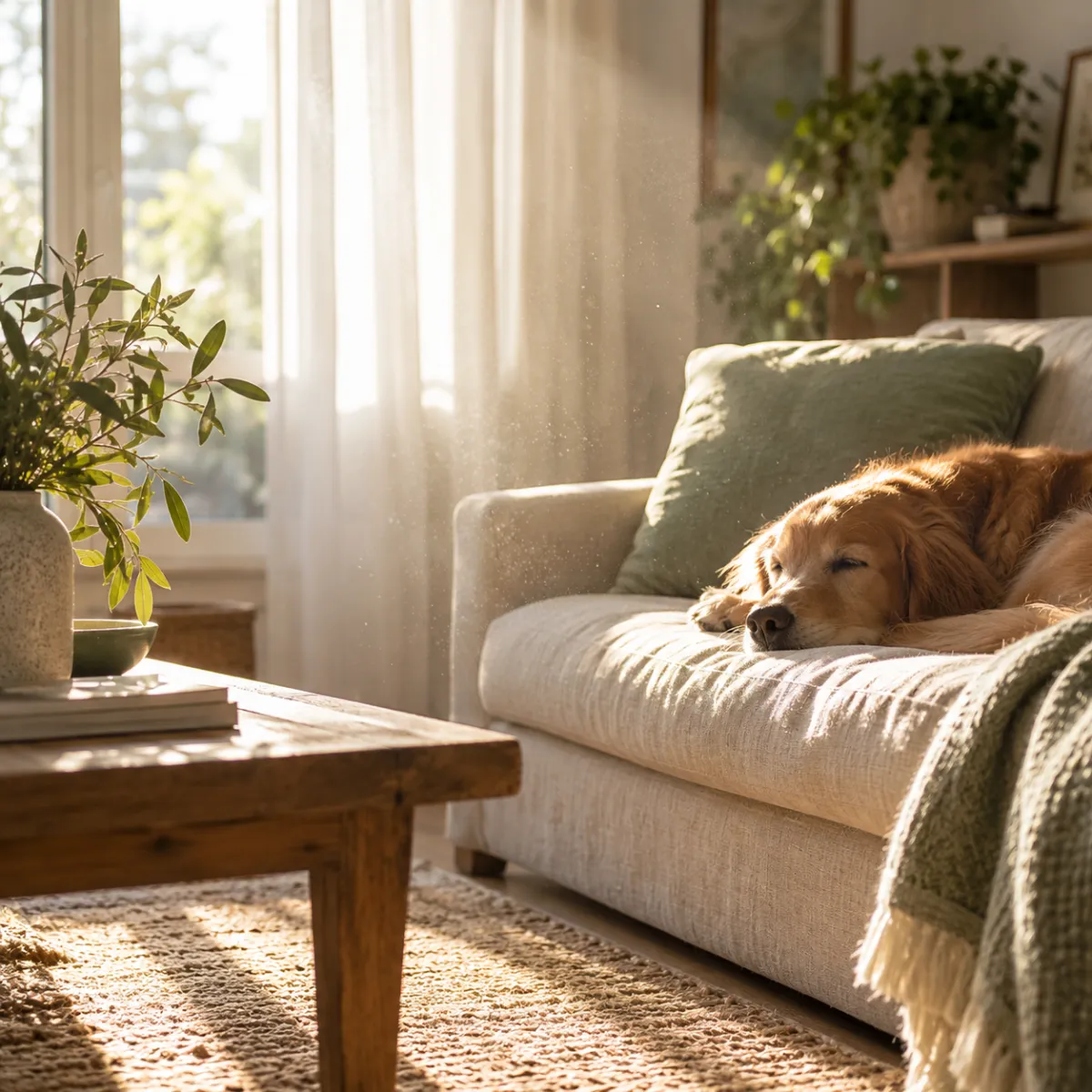
Beam of window light revealing airborne dust and pollen in a cozy living room with a sofa and a dog, macro-ish lifestyle shot
Sunlit living room showing floating dust and pollen particles in a beam of light

How We Choose and Test Every Air Purifier for Allergies

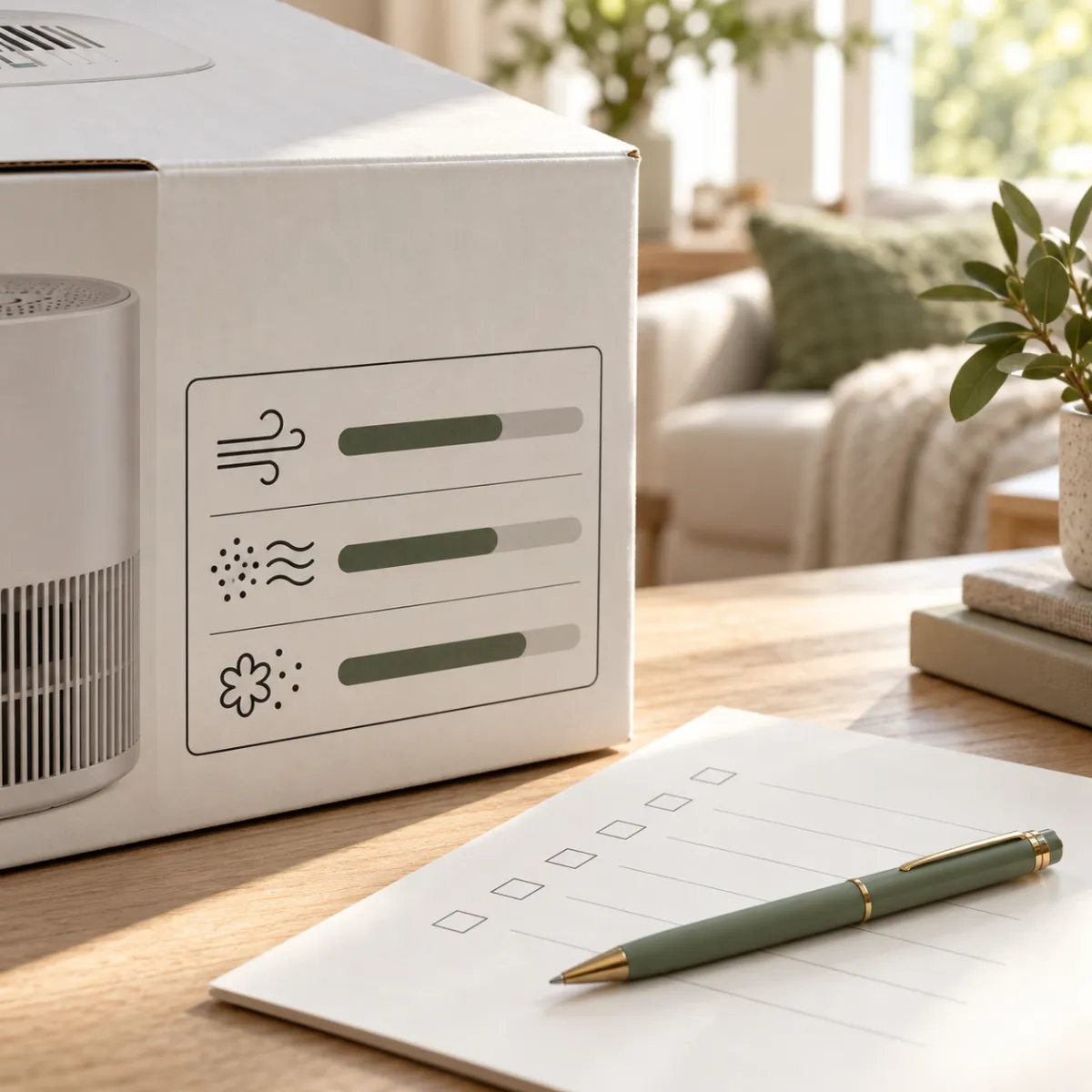
Close-up of an air purifier box side panel showing AHAM CADR label beside a printed checklist and pen on a desk
Air purifier spec label with AHAM Verifide seal and CADR numbers next to a checklist

We don't run a lab, and we won't pretend to. You won't find a line like "the air purifier we tested scored 9.4/10" here, or a giant test count nobody can check. Most air purifiers on the market look alike on paper, so every air purifier on this page had to clear the same checklist, built from published standards and long-term owner data:

  1. A real HEPA rating. It must capture 99.97% of particles at 0.3 microns. "HEPA-type" or "HEPA-like" wording gets a model cut.
  2. A verified CADR. We favor units certified under the AHAM standard (look for the AHAM Verifide seal), because independent labs testing air purifiers under one protocol makes numbers comparable.
  3. Ozone safety. No ozone generators. Any ionizer must be optional, and the model should appear on California's CARB list of certified air cleaners.
  4. Easy-to-find replacements, with a clear change interval and an activated carbon filter for odors.
  5. Published noise figures, since a loud unit gets switched off, and a switched-off unit cleans nothing.
  6. Owner feedback over months, not days. Sensor drift, rattles and fit complaints show up in long-term reviews.

No air purifier brand paid for placement, and we dropped several popular air purifier models that failed one of these tests. If you're still unsure how to choose an air purifier after reading the picks, the buying guide below walks you through it.

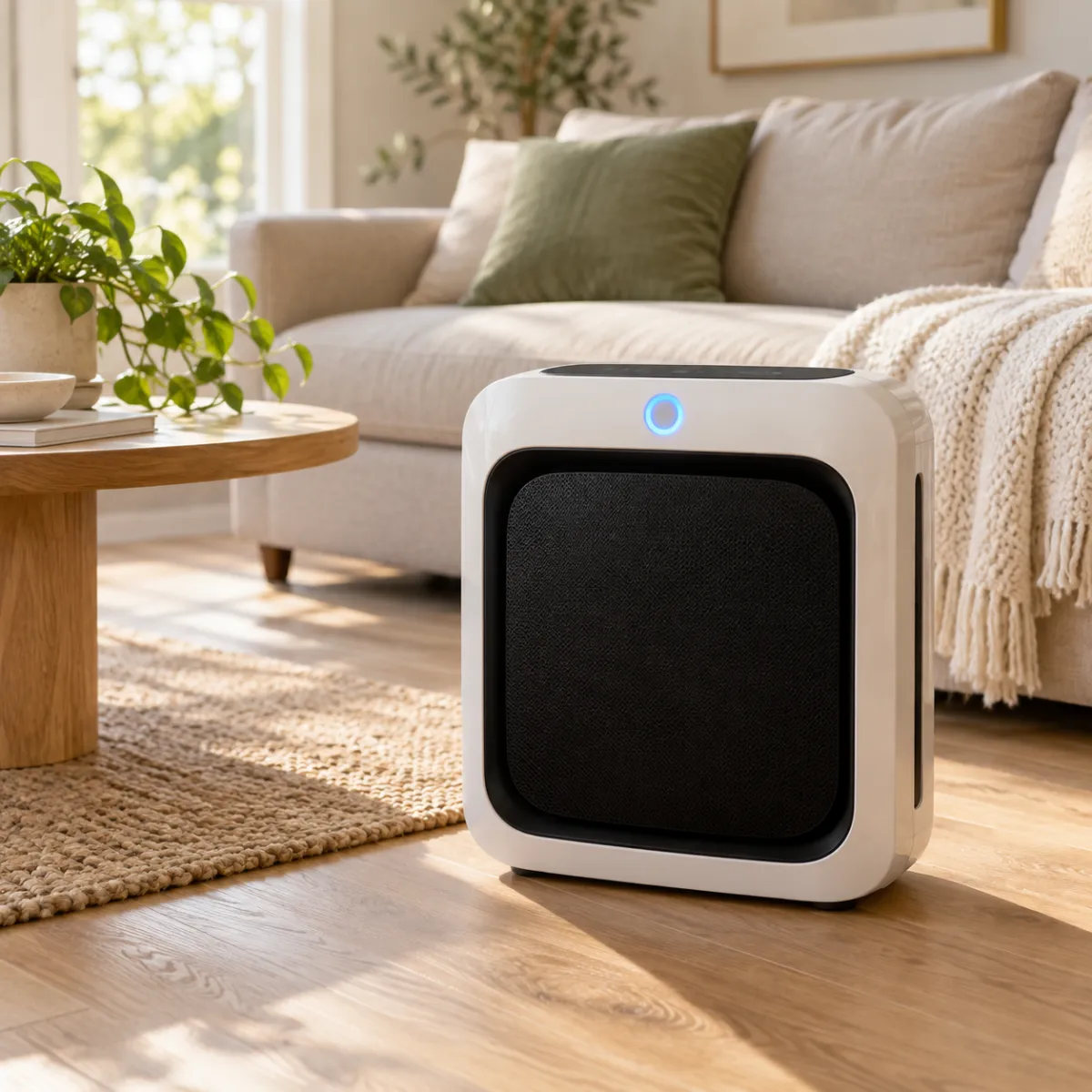
Coway Airmega AP-1512HH on a wooden floor in a living room, front air quality light on, product lifestyle photo
Coway Airmega AP-1512HH air purifier with its color-coded air quality indicator glowing blue
Model
Coway Airmega AP-1512HH
Best for
Most bedrooms and living rooms
Price tier
Mid-range
Top pick

Best Overall Air Purifier for Allergies

The Coway Airmega AP-1512HH (often sold as the "Mighty") has stayed on allergy shortlists for years, and it isn't hard to see why. It's compact enough for a bedroom, strong enough for a mid-sized living room and simple enough that you'll actually leave it running. If you want one machine that covers the most homes with the fewest compromises, this is it.

Why We Like It

Air moves through four stages: a washable pre-filter for hair and lint, an activated carbon layer for odors, a true HEPA filter for fine particles like pollen and dander, and an optional ionizer you can switch off. A color-coded air quality indicator glows blue, purple or red, so you can watch conditions shift when someone opens a door in spring. In auto mode the air purifier’s sensor ramps the fan up on its own, and eco mode pauses it once the room has stayed clean for a while, saving energy.

It's a true HEPA air purifier without fuss: no app to set up, no subscription, and replacement filters are easy to find.

Who It's Best For

Get it if you want the best overall balance for a bedroom or average living room and don't need Wi-Fi. Skip it if you're trying to cover a big open-plan space; the Honeywell below is the better match.

Check price

It's a popular model, so stock and deals swing often. See today's price on Amazon.

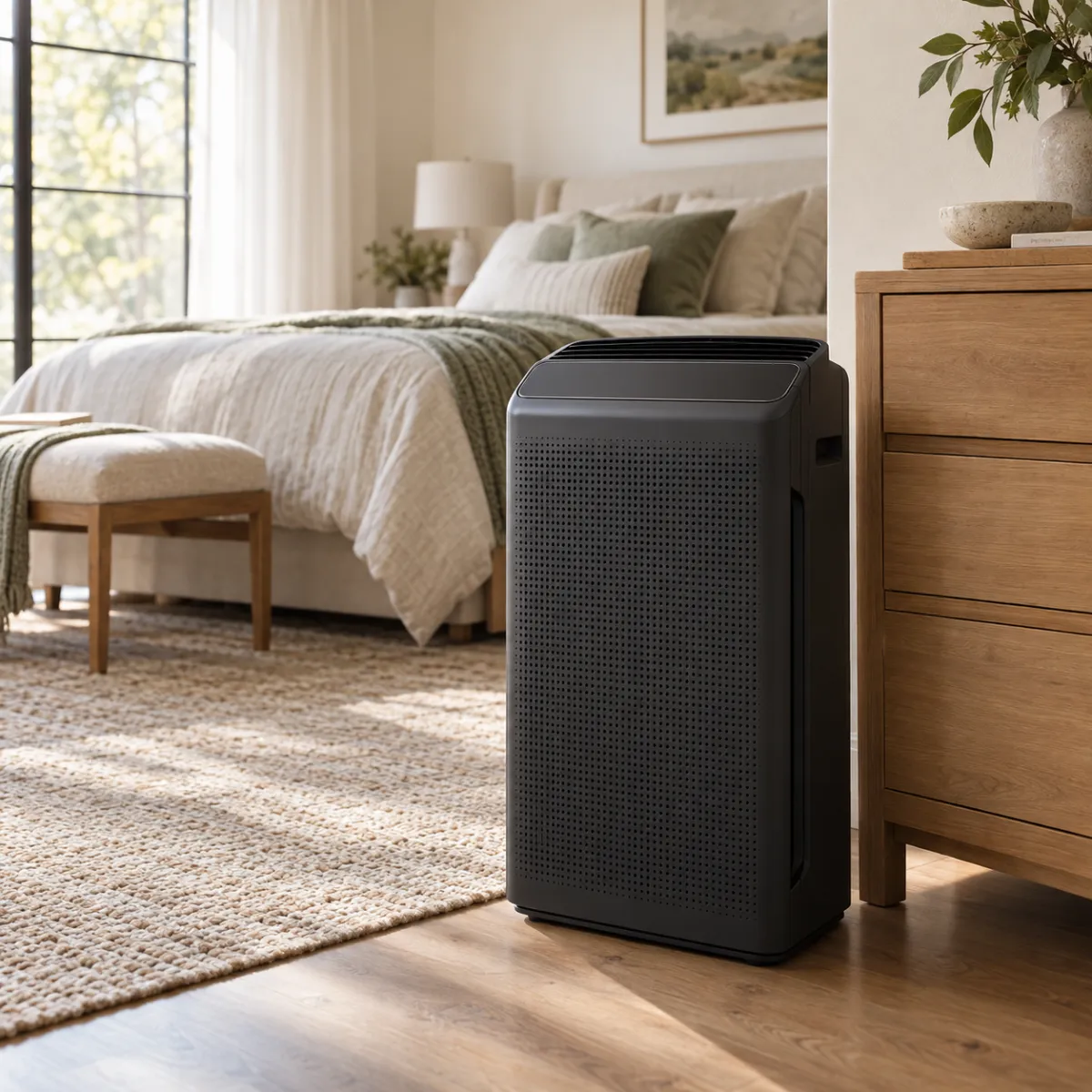
Winix 5500-2 tower air purifier next to a dresser in a large bedroom, neutral tones
Winix 5500-2 air purifier in a large bedroom
Model
Winix 5500-2
Best for
Value with a full 3-stage stack
Price tier
Budget to mid
Budget

Best Budget Air Purifier for Allergies

The Winix 5500-2 gets you a full cleaning stack without premium-tier spending. It's one of the best options for anyone who wants serious relief in a living room or large bedroom and would rather put the savings toward spare filters.

Why We Like It

It's equipped with a true HEPA layer rated to trap 99.97% of particles at 0.3 microns, plus a fine-mesh pre-filter and a washable carbon filter that handles cooking and pet smells. There's an air quality indicator, an auto mode that reacts to dust and a sleep mode that dims the lights. For the value tier, that's a lot of real capability.

What You Give Up

It's bulkier than premium designs, and there's no app. It also includes PlasmaWave, Winix's ionizing feature. You can switch it off, and if you have asthma or react to ozone, we'd suggest doing exactly that (see the safety section). Filter replacement is straightforward; the HEPA sheet typically lasts about a year.

Check price

Budget models sell out during spring. Check current price and availability.

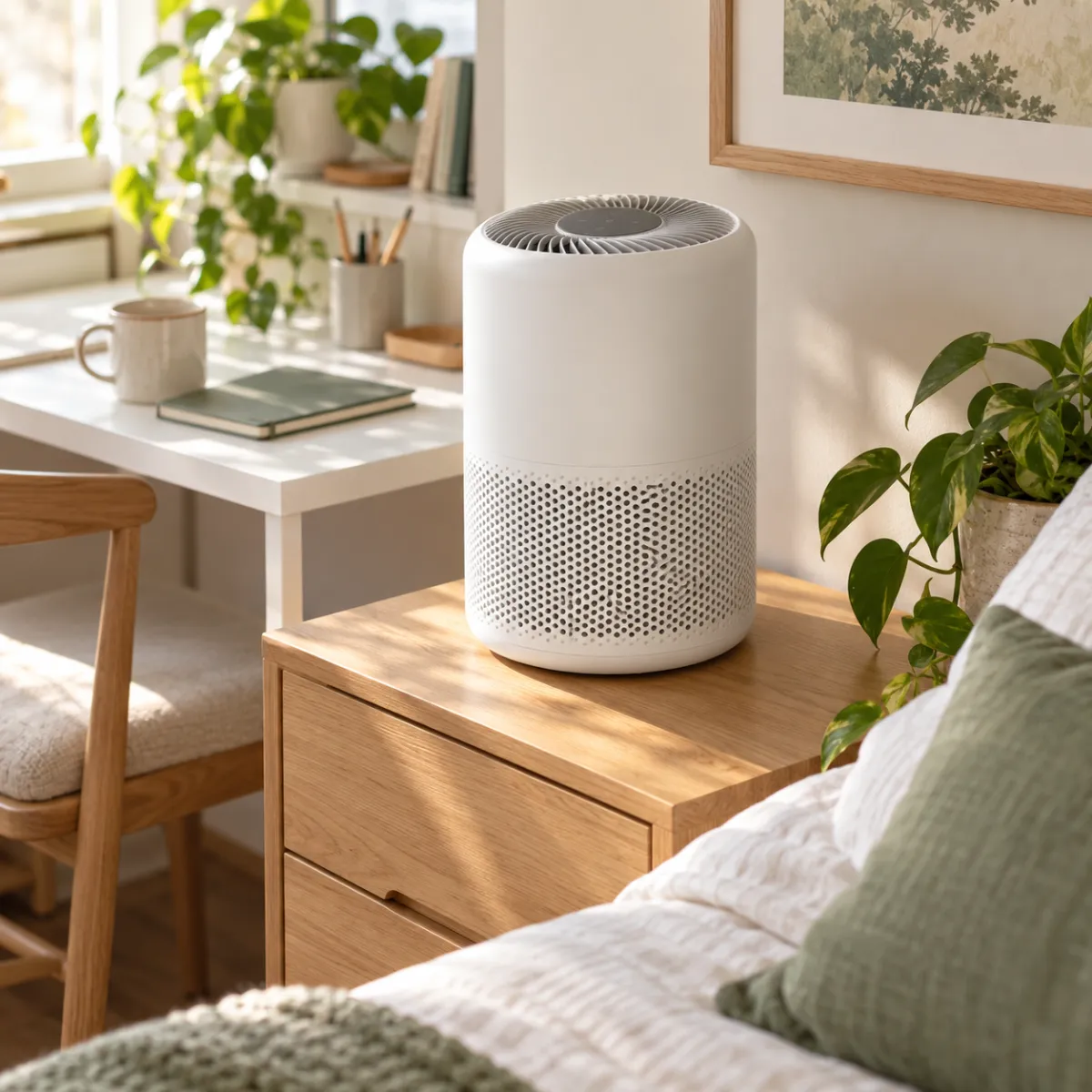
Levoit Core 300 cylinder purifier on a desk or nightstand in a small dorm/home office
Levoit Core 300 compact air purifier on a nightstand in a small bedroom
Model
Levoit Core 300
Best for
Bedrooms, dorms, home offices
Price tier
Budget
Small spaces

Best Air Purifier for Small Spaces

If you're looking for an air purifier for a small bedroom, a dorm or a home office, the Levoit Core 300 is the one we'd point you to first. It's compact, light and quiet, and it doesn't cut corners where it counts.

Why We Like It

Its three-stage filter combines a pre-filter, an H13 HEPA layer and activated carbon in a single cylinder you swap in seconds. Levoit also sells alternate filters (Pet Allergy, Toxin Absorber, Smoke Remover), so you can tune it to your trigger without buying a new machine. On its sleep setting it's quiet enough for a light sleeper, and the display switches off completely.

Ideal Room Size

It's the best for small spaces, so think of it as a purifier for a small space: a standard bedroom or study, not a living room. Run it somewhere much bigger than its rating and it can't cycle the air often enough to matter. Keep it close to the bed or desk for the best performance.

Check price

Small price tier, big difference at night. See today's price on Amazon.

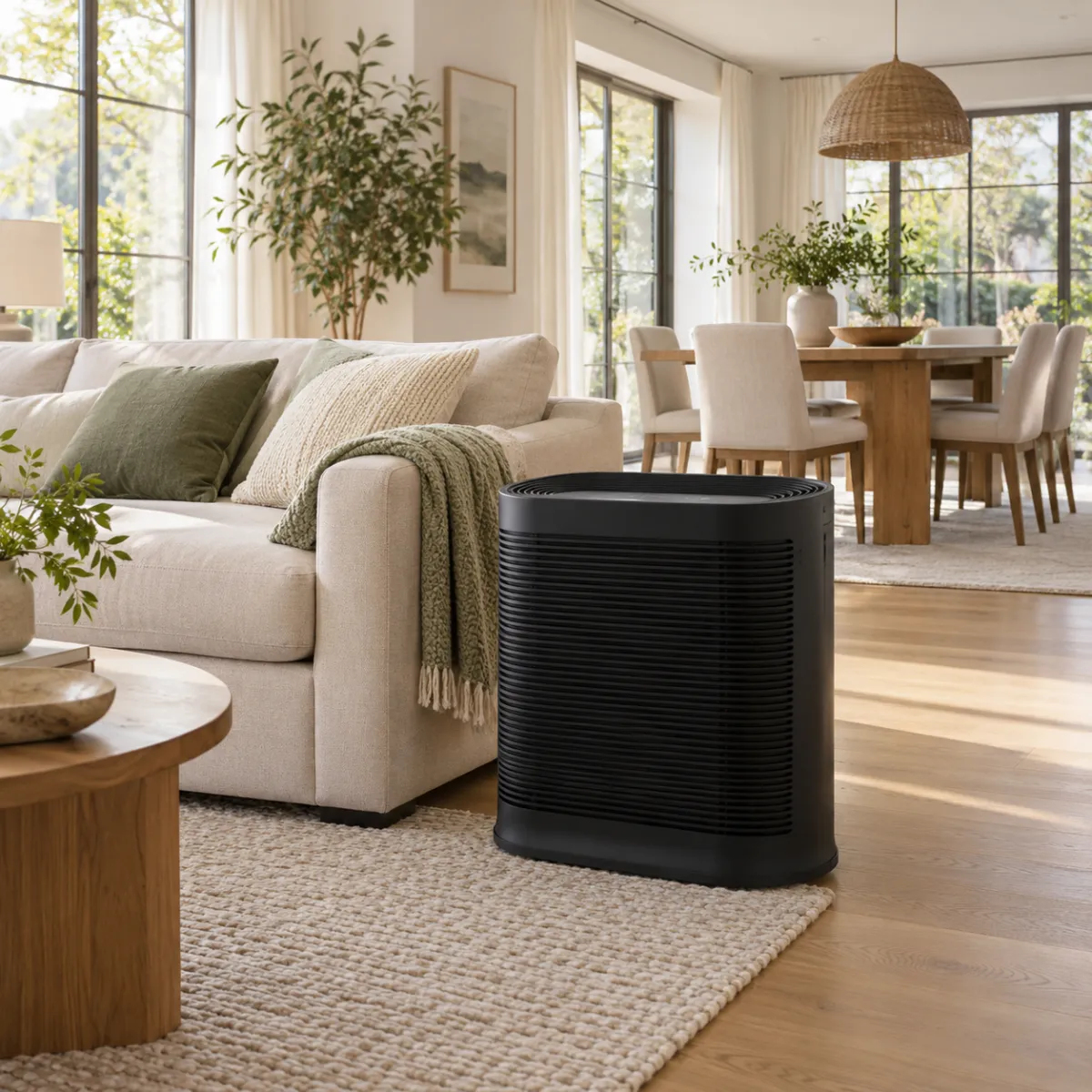
Honeywell HPA300 in a spacious open-plan living and dining room, wide shot
Honeywell HPA300 air purifier in an open-plan living room
Model
Honeywell HPA300
Best for
Open-plan living areas
Price tier
Mid-range
Big open rooms

Best Air Purifier for Large Rooms and Large Spaces

Open-plan living rooms are where weak purifiers quietly fail. The Honeywell HPA300 is our best for large, open-plan rooms and the unit we'd choose for a large room, because it's built around raw air cleaning power and a high AHAM-certified CADR, which is the number that matters most in a large space.

Why We Like It

It pairs a true HEPA sheet with an activated carbon pre-filter and offers four cleaning levels, including Turbo for the days you've just vacuumed or the dog has come in from a long spring walk. It's a powerful air purifier with no gimmicks: no ionizer, no ozone worries and controls anyone in the house can figure out. Excellent air movement for the size, plainly delivered.

Coverage Area

For allergies, you want the room's air replaced about four to five times an hour. A big unit like this can manage that in a sizable living room; a compact one can't. The math is simple, and it's in the buying guide below. The trade-off: Turbo is loud, so run it hard during the day and drop a level at night.

Check price

Bigger rooms need bigger machines. Compare today's price before you settle for a smaller unit.

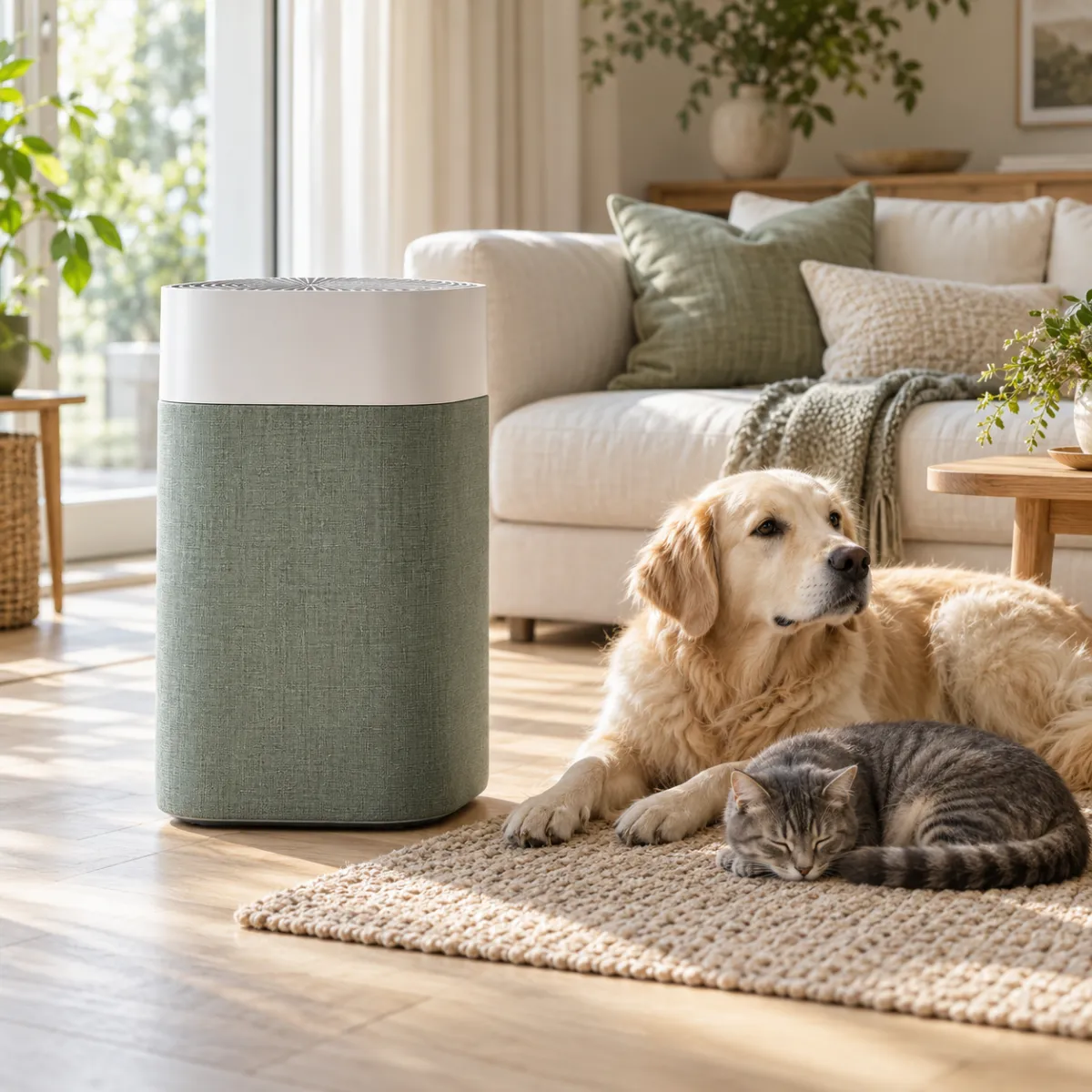
Blueair Blue Pure 211i Max with a colored washable fabric sleeve in a living room with a cat and a dog resting nearby
Blueair Blue Pure 211i Max with colored fabric pre-filter next to a sleeping cat and dog
Model
Blueair Blue Pure 211i Max
Best for
Multi-pet households
Price tier
Mid to premium
Pets

Best Air Purifier for Pet Allergies and Pet Dander

Pets bring three problems: dander you can't see, fur you can, and odor. The Blueair Blue Pure 211i Max handles all three, which is why it's our pick for homes with cats, dogs or both.

Why We Like It

The colored fabric sleeve on the outside is a washable pre-filter that catches pet hair before it reaches the main filter, and it goes straight into the washing machine when it looks fuzzy. Inside, a combined particle-and-carbon filter traps dander and soaks up litter-box and wet-dog smells. It draws air in from all sides, so placement is forgiving, and its sensor-driven auto mode reacts when shedding picks up.

Pet-Specific Features

Blueair uses its own HEPASilent design, which pairs mechanical capture with an electrostatic charge instead of relying on a dense HEPA sheet alone. That keeps airflow high and noise low. In a multi-pet home, run it on auto and wash the sleeve every couple of weeks; the main filter will last noticeably longer.

Check price

Pet owners tend to run these 24/7. Check today's price and grab a spare filter while you're there.

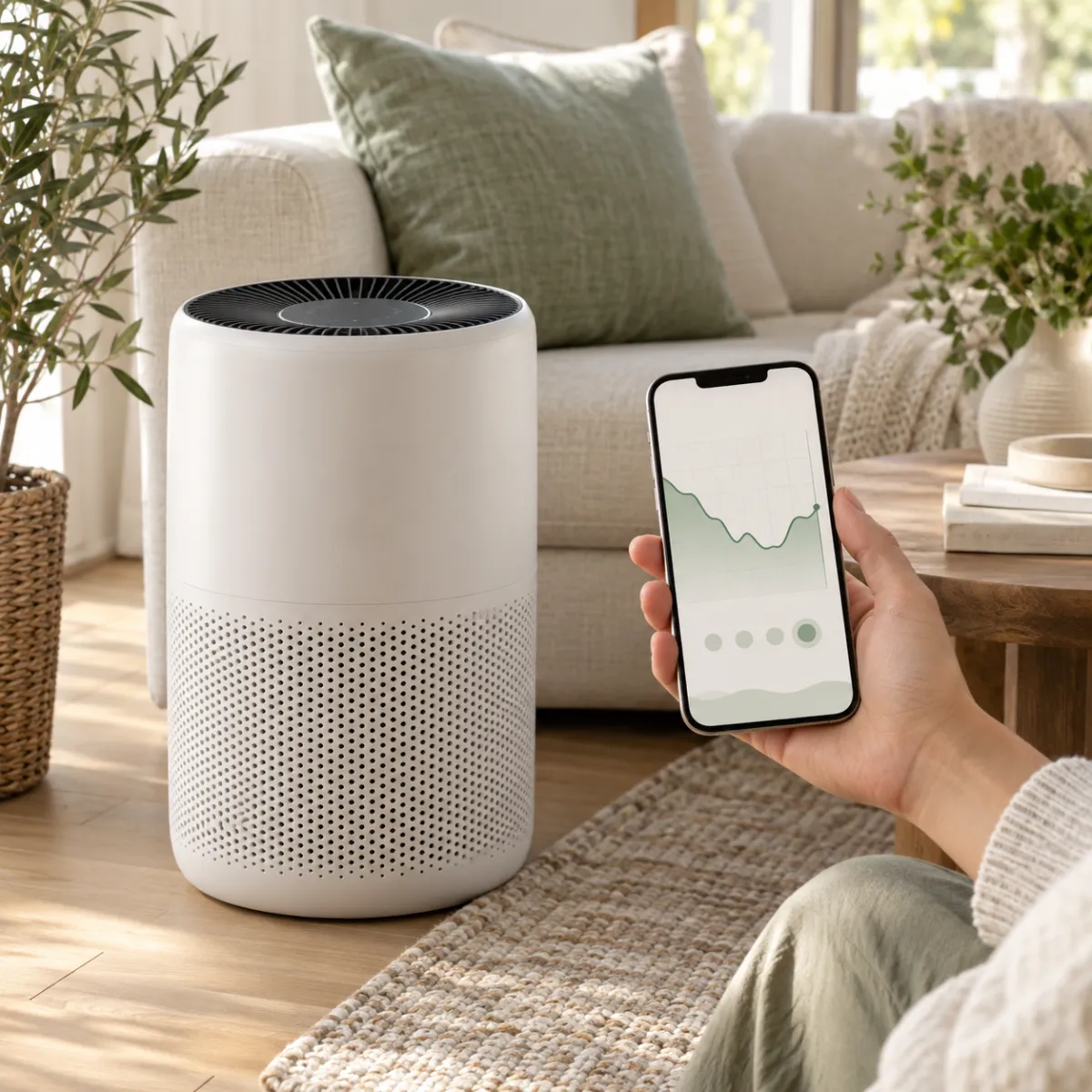
Levoit Core 400S beside a hand holding a smartphone showing an air quality graph
Levoit Core 400S air purifier with real-time air quality reading shown in the VeSync app on a phone
Model
Levoit Core 400S
Best for
Live readings and app control
Price tier
Mid-range
Smart

Best Smart Air Purifier for Allergies

The Levoit Core 400S is the smart air purifier we'd pick for allergies. Its laser particle sensor shows real-time air quality on the unit and in the VeSync app, so you see what's happening rather than guess.

Why We Like It

You get an H13 HEPA layer, carbon for odors and a strong fan for a medium-to-large room. The built-in air quality sensor feeds auto mode, which bumps the speed when particles spike and backs off once things settle. It works with Alexa and Google Assistant, and schedules let it run hard before you get home.

App and Sensor Features

Live readings matter because they reveal patterns. Many owners notice spikes when they open windows on high-count mornings, after cooking or when the vacuum runs. The app lets you monitor air quality over time and track filter life, so you can plan a filter swap before performance drops.

Check price

Smart models see frequent price changes. See what it costs today on Amazon.

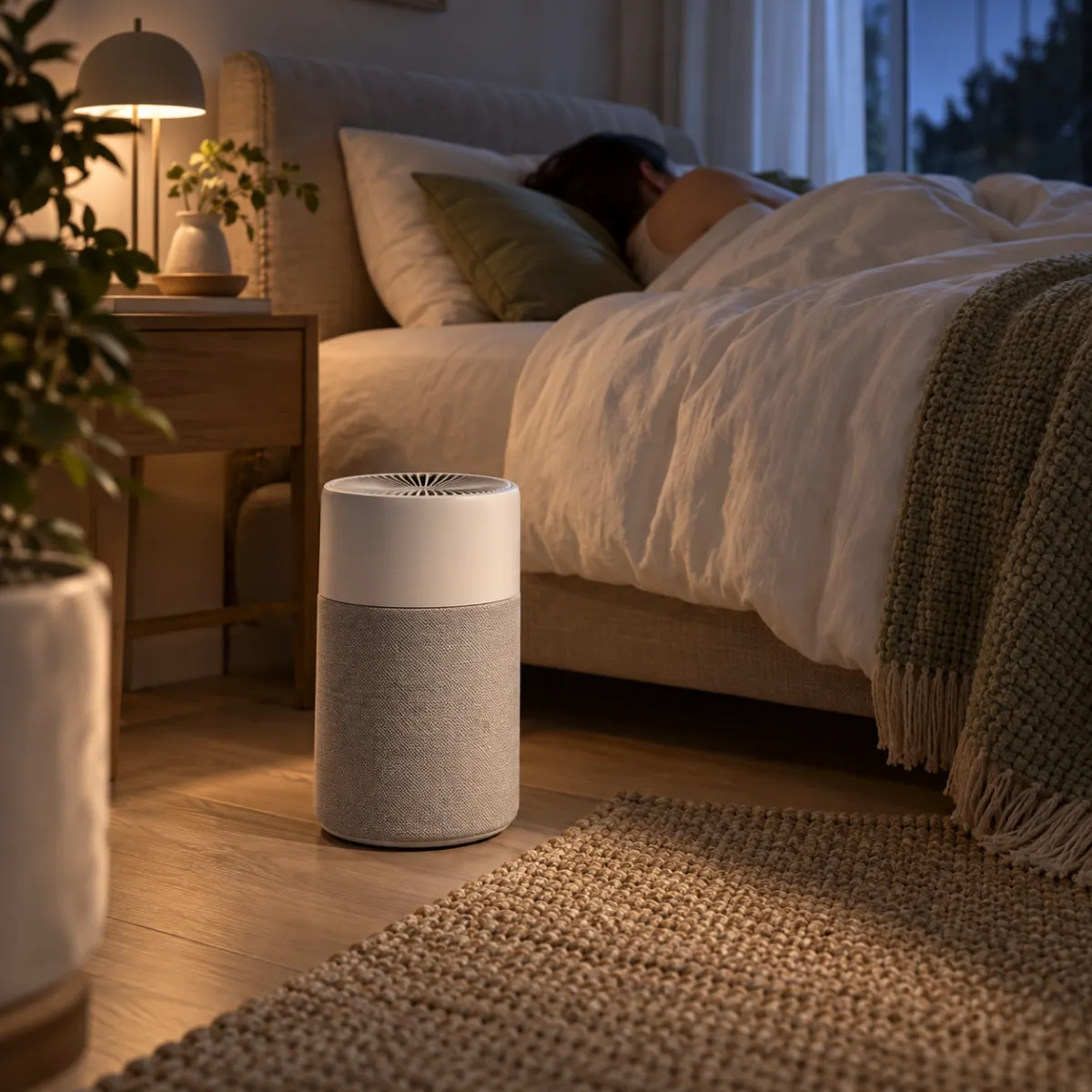
Small Blueair Blue Pure 411i Max on a bedroom floor at night with dimmed lights, person sleeping
Blueair Blue Pure 411i Max running quietly in a dim bedroom at night
Model
Blueair Blue Pure 411i Max
Best for
Light sleepers
Price tier
Budget to mid
Quiet bedroom

Best Quiet Air Purifier for Bedrooms

Bedrooms deserve their own pick because that's where you spend eight hours breathing one room's air. The Blueair Blue Pure 411i Max is small, very quiet on low and designed to disappear into the background, exactly what you want in an air purifier for allergy sufferers who sleep lightly.

Why We Like It

It brings the same washable fabric sleeve and particle-plus-carbon filter as its bigger sibling, scaled for a bedroom. An air quality display and auto mode handle adjustments, and night mode dims the lights so it won't glow on your nightstand.

Sleep-Friendly Noise Level

For sleep, look for a published figure under about 30 dB on the lowest setting, roughly a whisper. This model sits in that range on night mode, so you can leave it running instead of switching it off at 2 a.m.

Check price

Better sleep starts with air you don't notice. Check the current price.

What to Look for in an Air Purifier for Allergies: HEPA Filters, CADR and Room Size

Most buying mistakes come down to three things: the wrong filter, too little airflow and a unit too small for the room. Get those right and the brand matters far less.

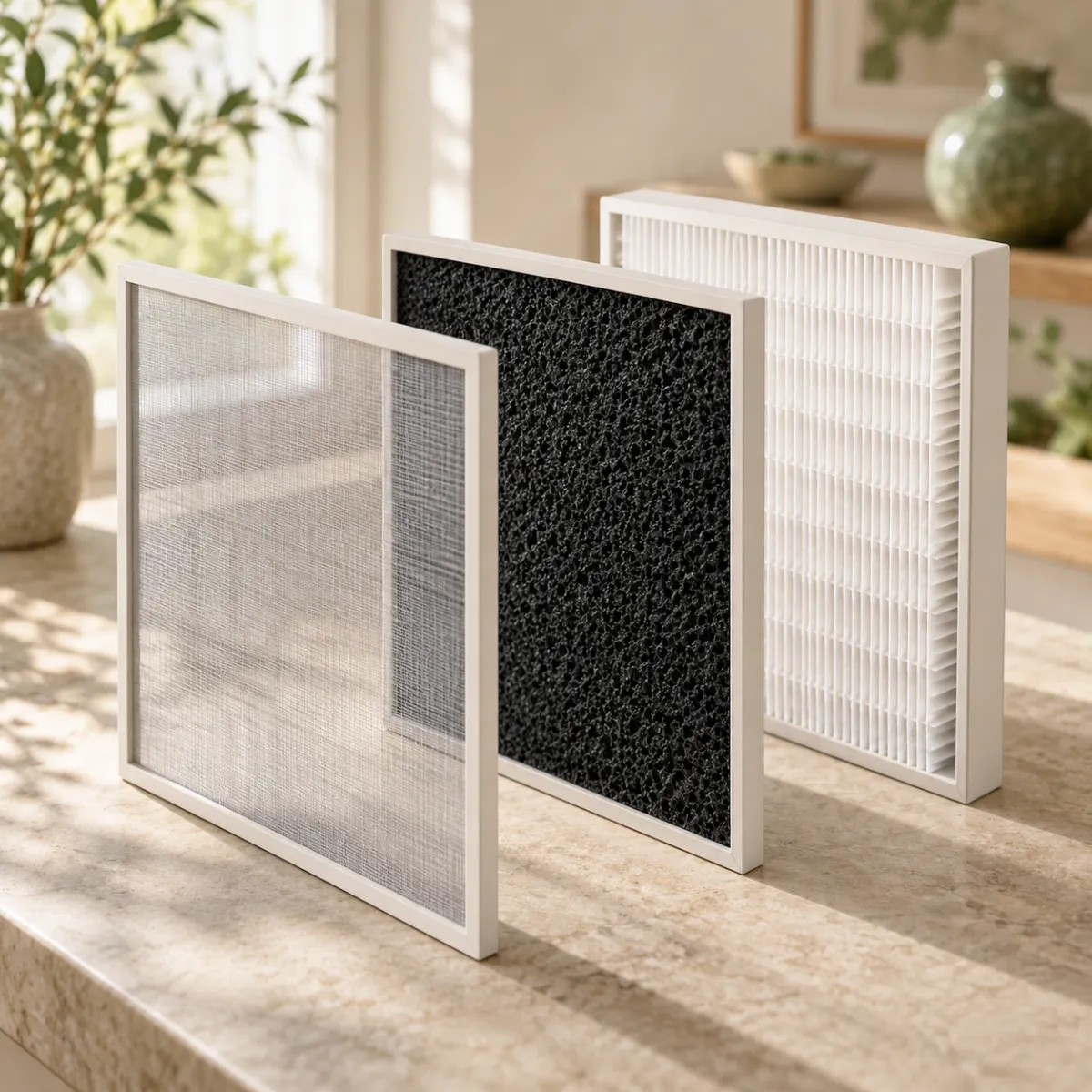
Exploded diagram-style photo of three filter layers: mesh pre-filter, black carbon filter, pleated white HEPA filter
Cutaway of an air purifier showing pre-filter, activated carbon filter and true HEPA filter layers

True HEPA Filter and Carbon Filtration

A true HEPA filter that captures 99.97% of particles down to 0.3 microns, the hardest size to trap, is the baseline. Pollen, dander and mold spores are all larger than that, so they're caught easily. Read labels closely: "HEPA-type" has no standard behind it. Look for real HEPA or the H13 grade.

An activated carbon filter does a different job. It adsorbs gases and odors (smoke, cooking smells, VOCs) that HEPA can't touch. For allergy relief, carbon is a bonus; HEPA is the must-have. If you're comparing air filters for your HVAC system instead, MERV 13 is the practical target for whole-house air filtration.

Clean Air Delivery Rate (CADR) Explained

The clean air delivery rate tells you how many cubic feet of cleaned air a unit pushes out per minute. The AHAM label lists three numbers: smoke, dust and pollen. For allergies, focus on the dust and pollen figures. A rough rule from AHAM: the smoke CADR should be at least two-thirds of the room's square footage. A 150 sq ft bedroom, for example, needs a smoke CADR of 100 or more.

Room Size and Air Changes Per Hour

Air changes per hour (ACH) is how many times the whole room's air passes through the filter each hour. For allergies, aim for 4 to 5. Here's the quick calculator:

Required CADR = square footage × ceiling height × target ACH ÷ 60

A 12 × 15 ft bedroom with 8 ft ceilings holds 1,440 cubic feet. Multiply by 5 ACH, divide by 60, and you need about 120 CFM. Now match that against the box. When in doubt, size up. A bigger unit on low is quieter than a small one straining on high, and it does a better job.
Your room
120CFM
Video: why ACH, not the box's room-size claim, is what actually sizes an air purifier

Top pick: Coway Airmega AP-1512HH

Check price

Air Purifier Comparison Table: Price, CADR and Best-For

All seven air purifiers on this list, side by side. CADR class reflects each model's AHAM-listed rating relative to the others here; confirm exact figures on the product listing, since manufacturers revise models.

ModelBest forStagesCADR classRoom sizeNoise on lowPrice tierAction
Coway Airmega AP-1512HHTop pickMesh + carbon + HEPAMediumMediumVery quietMid-rangeCheck price
Winix 5500-2BudgetMesh + carbon + HEPAMedium-highMedium to bigQuietBudget to midCheck price
Levoit Core 300Small spacesMesh + H13 HEPA + carbonLow-mediumSmallVery quietBudgetCheck price
Honeywell HPA300Big open roomsCarbon pre-stage + HEPAHighBigModerateMid-rangeCheck price
Blueair Blue Pure 211i MaxPetsFabric sleeve + particle/carbonHighBigQuietMid to premiumCheck price
Levoit Core 400SSmart featuresMesh + H13 HEPA + carbonMedium-highMedium to bigQuietMid-rangeCheck price
Blueair Blue Pure 411i MaxQuiet bedroomsFabric sleeve + particle/carbonLow-mediumSmallVery quietBudget to midCheck price

Found your match? Tap Check price in that row to see today's price and stock.

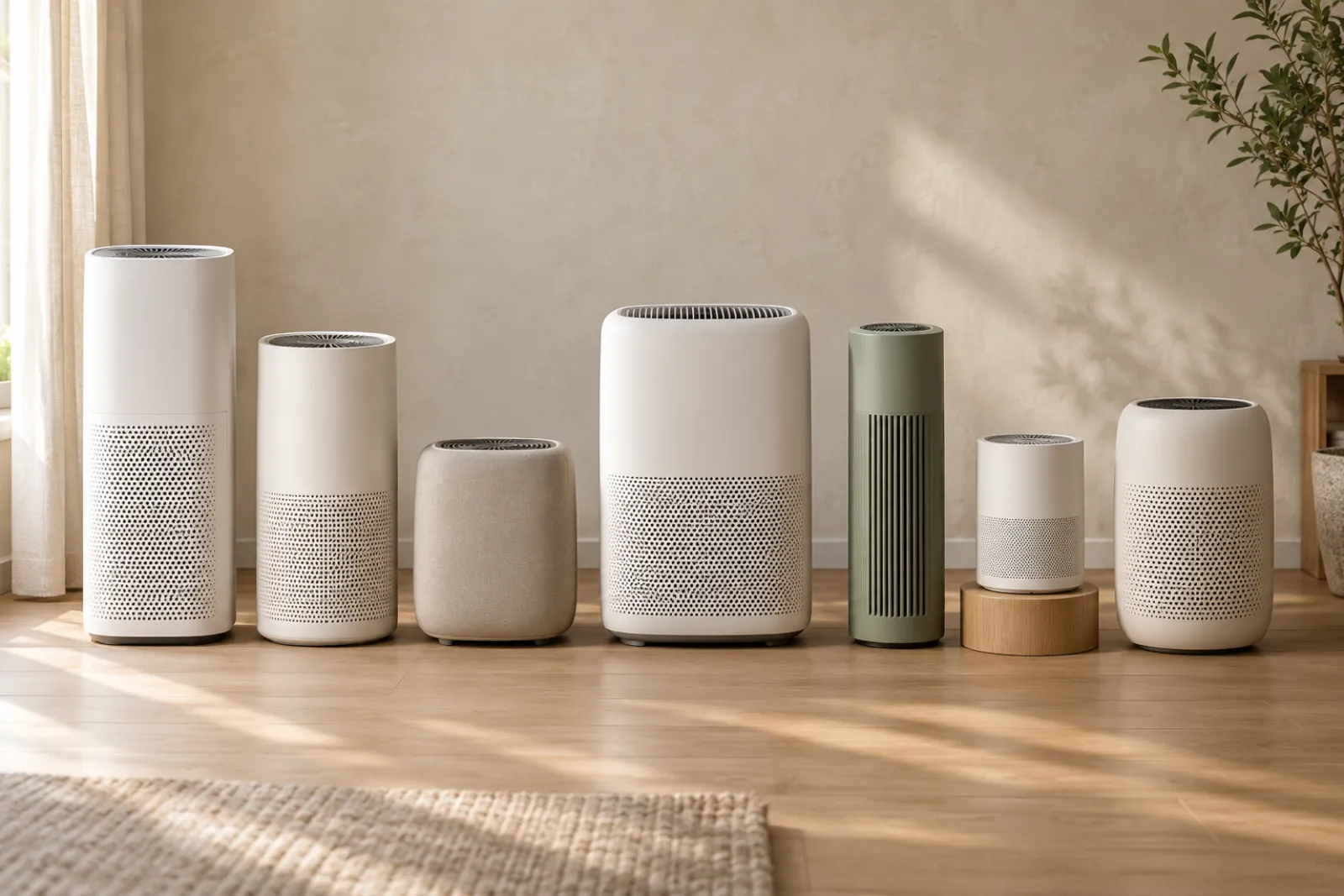
Lineup of seven different air purifiers of varying sizes against a neutral wall, studio photo
Seven air purifiers lined up side by side for comparison

Best Air Purifier by Allergy Type: Pollen, Pet Dander, Dust and Mold

Different triggers behave differently in the air, so the right features shift with whatever makes you sneeze. Here's how to match the machine to the allergen.

Four-panel illustration: pollen grain, pet dander, dust mite, mold spores, clean flat style
Icons of pollen, pet dander, dust mites and mold spores

Pollen and Seasonal Allergies

Tree and grass grains are big by filtration standards, so any HEPA unit catches them. The challenge is volume: in peak season, more keeps coming in through doors, windows and your hair. For pollen allergies, prioritize a high CADR and an auto mode that reacts when the door opens. Keep windows shut on high-count days and run the unit in your bedroom overnight. That routine does the most for seasonal allergies.

Pet Dander and Pet Hair

Dander is the real allergen, not the fur. It's light, sticky and lingers for hours, which is why continuous cleaning matters more than turbo bursts. A washable outer screen keeps hair from clogging the HEPA layer, and a thicker carbon bed takes care of odor. With several pets, choose a unit rated for more square footage than you actually have.

Dust Mites and Mold Spores

Dust mite debris is heavy and settles within minutes, so a purifier only catches it when bedmaking, vacuuming or walking stirs it up. Pair the unit with allergen-proof bed covers and hot-water washing. Mold spores are lighter and stay airborne longer, so HEPA handles them well, while carbon helps with the musty smell. If you have severe allergies to mold, fix the moisture source first; no machine can out-clean a damp basement. In every case, the goal is the same: remove allergens from the air before they reach you.

Pets: Blueair Blue Pure 211i Max

Check price
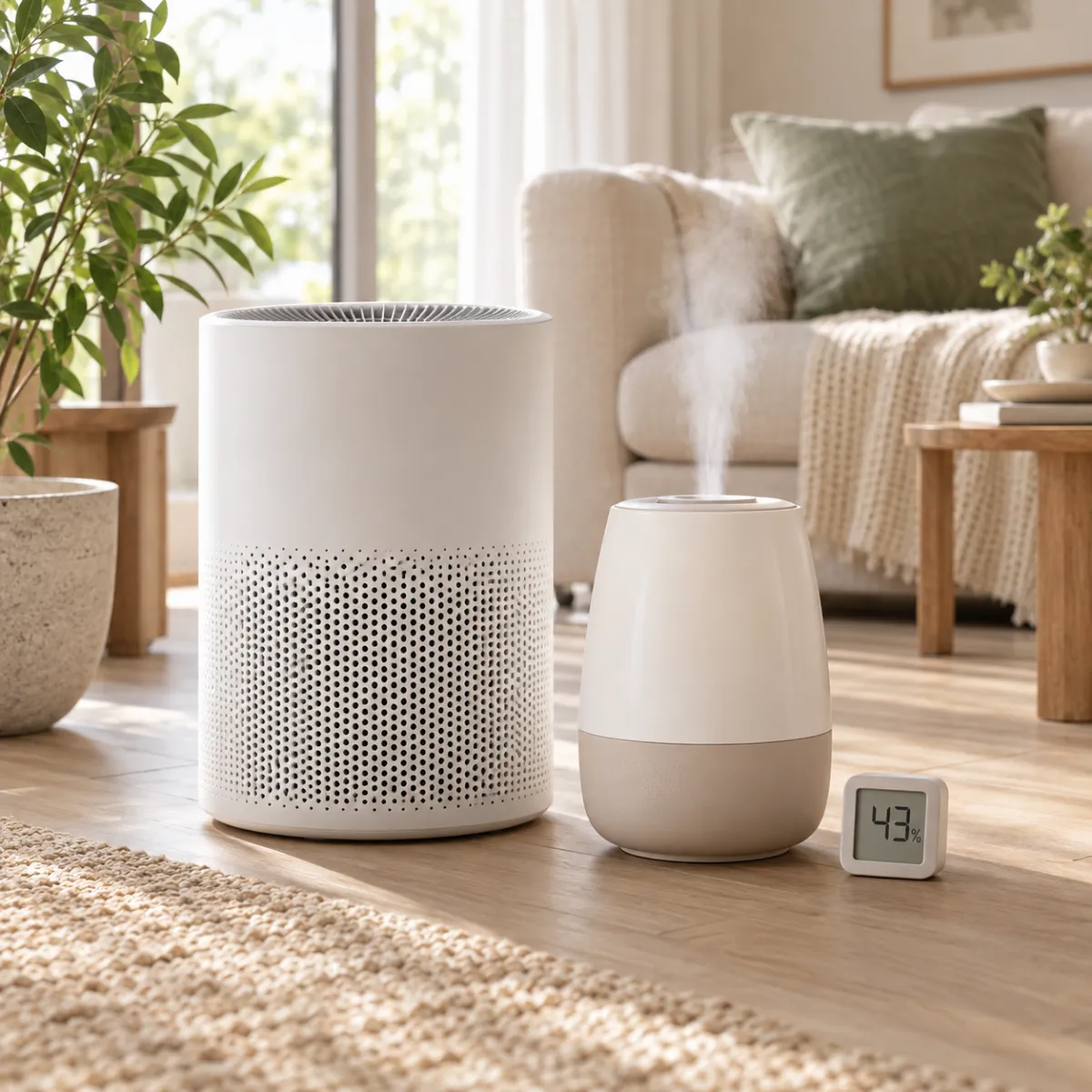
Air purifier and ultrasonic humidifier on a floor with a small digital hygrometer showing humidity in the 30-50% range
Air purifier and humidifier side by side with a hygrometer reading 45 percent

Air Purifier vs. Humidifier for Allergies

They do opposite-sounding jobs. A purifier removes particles. A humidifier adds moisture. Neither replaces the other.

A humidifier can ease dry air, scratchy throats and congestion in winter, when heating dries everything out. But humidity cuts both ways: dust mites and mold thrive above about 50% relative humidity. The EPA's guidance is to keep indoor humidity between 30% and 50%. Overshoot and you're feeding the very triggers you're trying to escape.

So if your main problem is dander, dust or seasonal grains, start with the purifier. Add a humidifier only if dry air is clearly making things worse, and pick up an inexpensive hygrometer to keep the level in range. Combo units exist, but separate devices are usually easier to clean and keep mold-free.

Total Cost of Ownership: Air Purifier Price vs. Filter Replacement Cost

The sticker on Amazon is only part of what you'll pay. Replacement filters add up over the years, and so does electricity for a machine that runs all day. Few guides show this, so before investing in an air purifier, work out the real number:

Your 3-year cost = unit price + (filters per year × filter price × 3) + electricity

Check two prices on the listing: the unit and its genuine replacement filter. Then use the intervals below. A cheaper unit with pricey, frequent swaps can cost more over three years than a mid-range model with long-lasting filters. Energy Star certified models also keep power use low, which matters when a fan runs around the clock. That's how you pick the right air purifier for home use, not just the cheapest box.

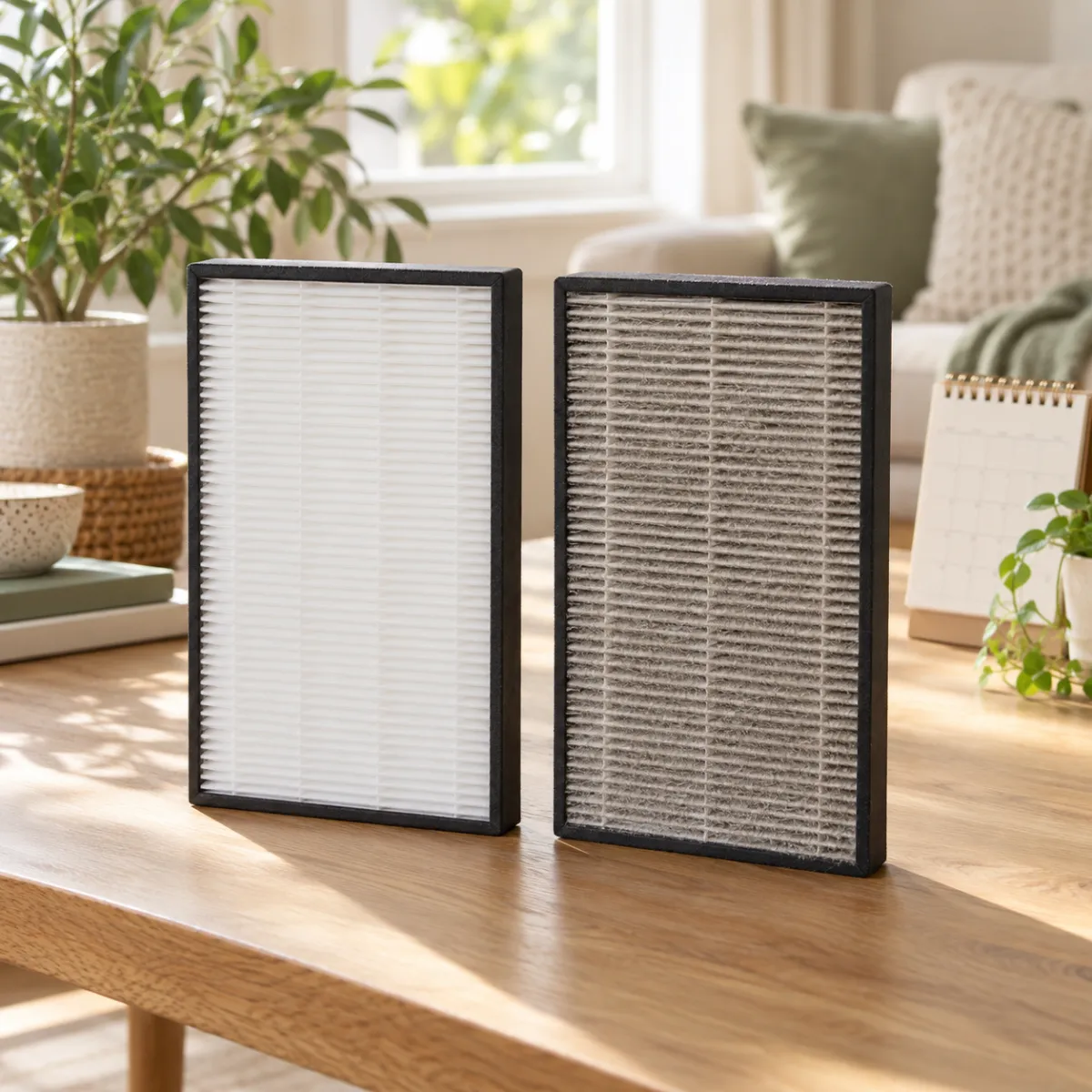
Fresh white pleated HEPA filter beside a dirty grey used filter on a table, calendar in background
New replacement HEPA filter next to a used grey filter

Annual Filter Replacement Cost by Model

ModelWhat you replaceTypical interval (manufacturer guidance)Running cost tier
Coway Airmega AP-1512HHHEPA + carbon setHEPA about 12 months, carbon about 6Low
Winix 5500-2HEPA (carbon is washable)About 12 monthsLow
Levoit Core 300All-in-one cartridgeAbout 6 to 8 monthsLow to moderate
Honeywell HPA300HEPA + carbon pre-stageHEPA about 12 months, pre-stage about 3Moderate
Blueair Blue Pure 211i MaxMain media (sleeve is washable)About 6 to 9 monthsModerate
Levoit Core 400SAll-in-one cartridgeAbout 6 to 8 monthsModerate
Blueair Blue Pure 411i MaxMain media (sleeve is washable)About 6 to 9 monthsLow to moderate

Heavy shedding, smoke or a long spring shortens every interval. Your filter-change light is the better guide.

Check price

Look up today's unit and filter prices together, and you'll know your true cost in a minute.

Ozone-Free and Ionizer Safety for Allergy and Asthma Sufferers

Many air purifiers add an ionizer, which charges particles so they clump and drop or stick to surfaces. The catch: some ionizers emit small amounts of ozone, a lung irritant. For anyone with asthma, that's the opposite of what you want from air purification.

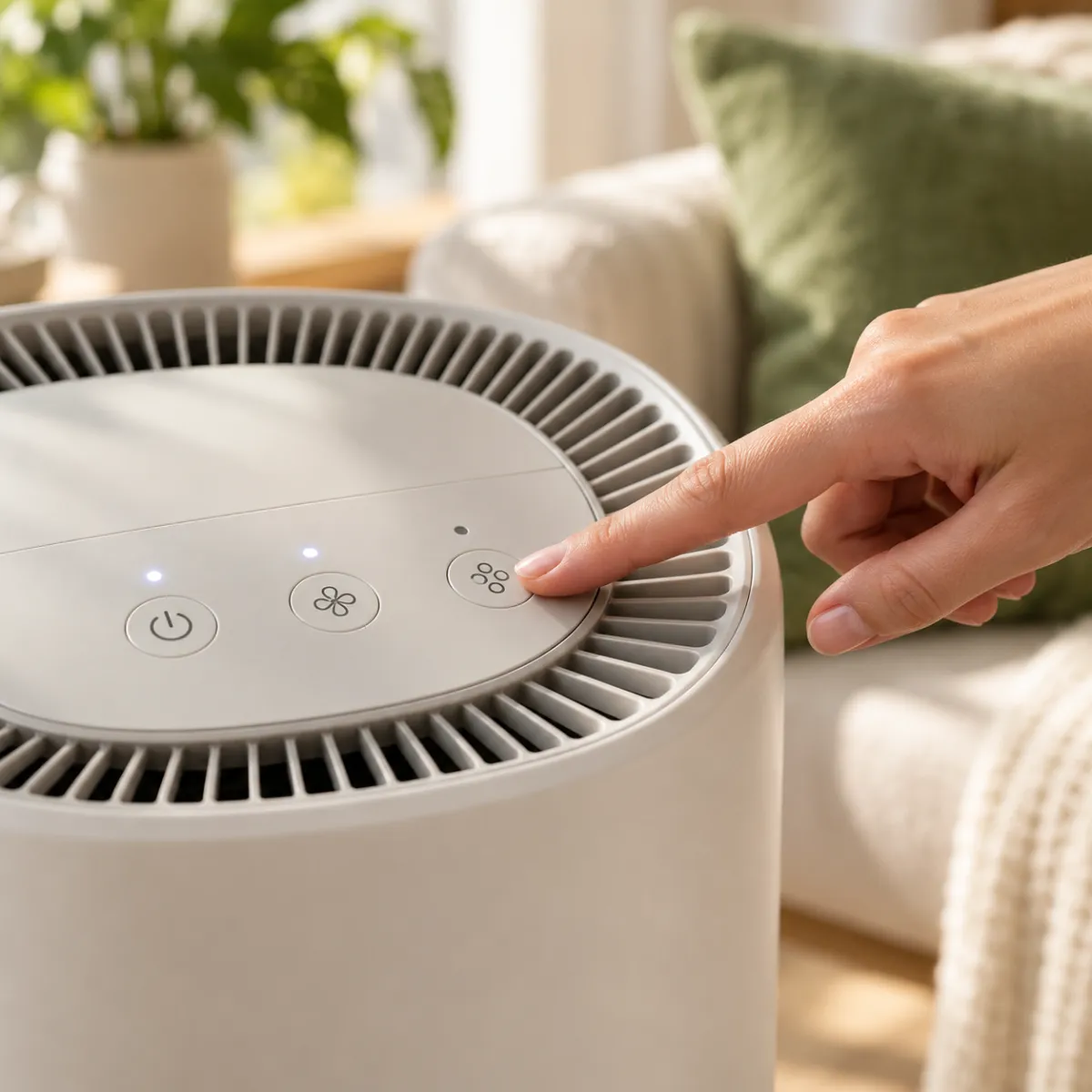
Finger pressing the ionizer off button on an air purifier control panel, close-up
Air purifier control panel with ionizer switched off

Three rules keep you safe:

  • Never buy an "ozone generator" sold as a purifier. The EPA warns that ozone at levels high enough to clean the air can irritate the lungs, and it does nothing useful for allergens.
  • Check the CARB list. California's Air Resources Board certifies air cleaners that stay under an ozone emission limit of 0.050 ppm. It's free to search and covers most major brands.
  • Turn optional ionizers off. Coway's ion feature and Winix's PlasmaWave both have an off switch, and capture works fine without them.

VOC claims deserve skepticism, too. Only a real carbon bed adsorbs gases; a thin carbon-dusted sheet does little. If you're sensitive, a HEPA-plus-carbon model with no ionizer at all is the cleanest choice, and the Honeywell HPA300 fits that description.

Check price

Air Purifier Placement and Maintenance Tips for Allergy Relief

Even the best unit underperforms in the wrong spot or with a clogged filter. A few small habits make a big difference.

Where to Place Your Air Purifier

Start with the bedroom; that's where you'll feel the change first. Put the unit within a few feet of the bed and about a foot from walls and furniture so the intake isn't blocked. Keep the door closed so a room air purifier cleans one room's air rather than the whole house's. Avoid corners behind curtains, and don't park it beside a heating vent that blows dust straight at it.

Run it continuously on auto. Air purifiers operate best as a constant background process. If you use an air purifier only when you sneeze, you're always playing catch-up. A portable air purifier can follow you from bedroom to office, but one per room works better. With central air, a MERV 13 HVAC upgrade helps the whole house while the room unit handles the space that matters most.

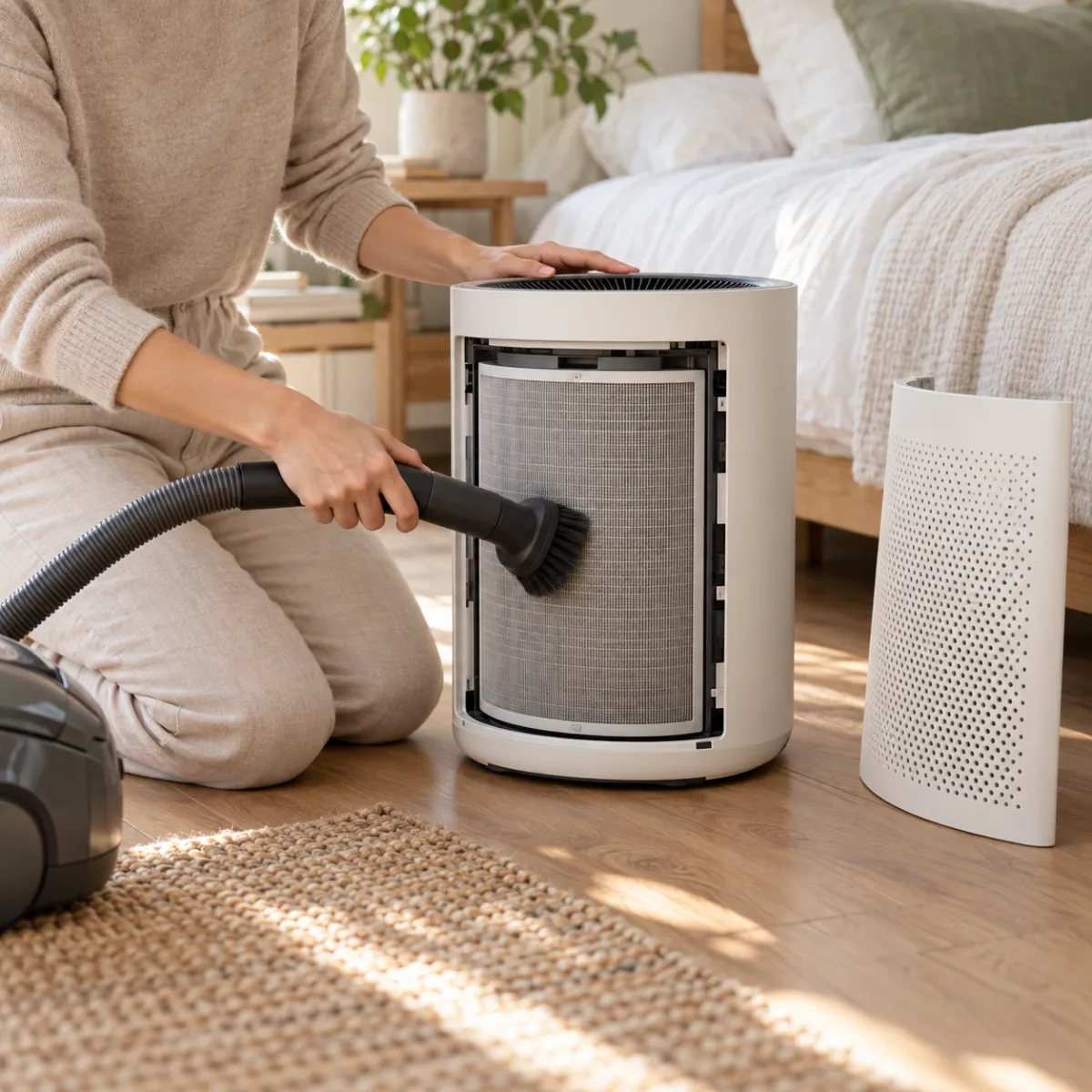
Person vacuuming the pre-filter of an air purifier positioned near a bed, away from the wall
Air purifier placed a foot from the wall near a bed while someone vacuums its pre-filter

How Often to Replace Filters

  • Mesh pre-filter: vacuum or wash every 2 to 4 weeks, more often with pets.
  • Carbon layer: roughly every 3 to 6 months, or sooner if odors come back.
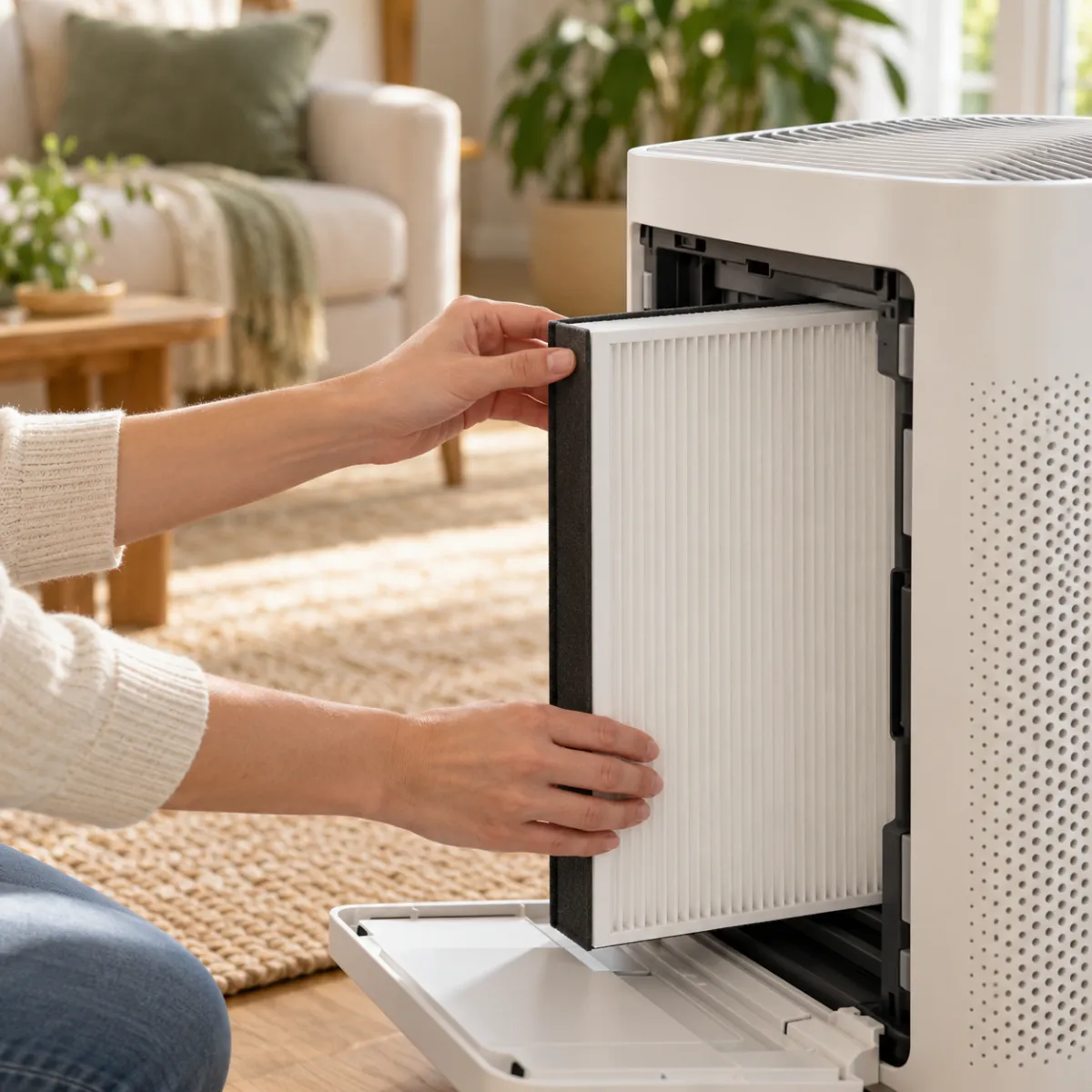
  • HEPA filter: typically every 6 to 12 months. Never wash it unless the manufacturer says it's washable; water ruins the fibers.

Buy genuine or certified replacement filters. Cheap knockoffs often fit loosely, letting air sneak around the edges and blow unfiltered air back into your space.

What Real Allergy Sufferers Say About These Air Purifiers

Spec sheets tell half the story. The other half comes from people living with these machines. Across long-term owner reviews and allergy threads on Reddit, the same lessons come up again and again (paraphrased themes, not cherry-picked quotes):

Smiling person on a sofa with a dog, air purifier in background, relaxed spring mood
Person relaxing at home breathing easily next to an air purifier
  • "I should've bought the bigger one." Undersizing is the most common regret. Owners who sized up for their room size report the clearest improvements in air quality and sleep.
  • "It only worked once I left it on." Running 24/7 on auto beats short bursts, especially for pet dander.
  • "Bedroom first." Many people start there, notice better mornings, then add a second unit for the living room.
  • "Watch the replacements." Weak-performance complaints often trace back to off-brand filters.
  • DIY works too. Budget-minded folks praise the Corsi–Rosenthal box, a box fan taped to MERV 13 panels. It's loud and bulky, but it moves a lot of air.

The takeaway: pick the right size, run it constantly and stick with genuine parts.

Check price

Join the people who sized up and slept better. See today's price on our top pick.

Frequently Asked Questions About Air Purifiers for Allergies

Hands sliding a new HEPA filter into an open air purifier
Hand changing an air purifier filter

Do air purifiers really work for allergies?

Yes, for airborne triggers. Air purifiers work by pulling pollen, dander and mold spores out of circulation, and studies show the clearest gains for pet- and dust-related symptoms. They don't remove what's already settled in bedding or carpets, so combine one with regular cleaning.

What should you avoid when buying an air purifier?

Skip "HEPA-type" labels, ozone generators and units without a published CADR. Also avoid buying too small for your room; it's the most common mistake we see.

What air purifiers do doctors recommend?

Doctors and allergists rarely endorse a single model. They point to a HEPA air purifier for allergies that's sized for the room, ideally placed in the bedroom, with no ozone output. The Asthma and Allergy Foundation of America also runs a certification program you can look for on the box.

What air purifier is best for removing pollen?

Any real HEPA unit with a strong pollen CADR for your room. For most homes, the Coway Airmega AP-1512HH is an easy choice; for big rooms, step up to the Honeywell HPA300.

What features should you look for in an air purifier for allergies?

Real HEPA, an AHAM-verified CADR that fits your room, a low-noise sleep setting and easy-to-find replacement filters. An auto mode with a particle sensor is a nice extra.

What size air purifier do you need for your room?

Multiply square footage by ceiling height, then by 5, and divide by 60. That's the CFM you need. When in doubt, size up.

Which air purifier filter is best for allergies?

A HEPA filter, preferably H13 grade. A true HEPA filter captures 99.97% of particles at 0.3 microns, which covers dander, mold spores and seasonal grains. Add activated carbon if odors or smoke bother you too.

Can air purifiers help with pet allergies and dust?

Yes. They catch airborne dander well and dust once it's stirred up. A washable outer screen helps with shedding pets.

Are air purifiers or humidifiers better for allergies?

A purifier. A humidifier only helps with dry-air congestion and can feed mold and dust mites if humidity tops 50%.

How often should I replace the filters in my air purifier?

HEPA filters usually every 6 to 12 months, carbon every 3 to 6, with the pre-filter cleaned every few weeks. Follow your change indicator and shorten intervals with pets.

Check price

Got your answer? Check today's price and stock on Amazon.

Breathe Easier: Choose Your Air Purifier for Allergies Today

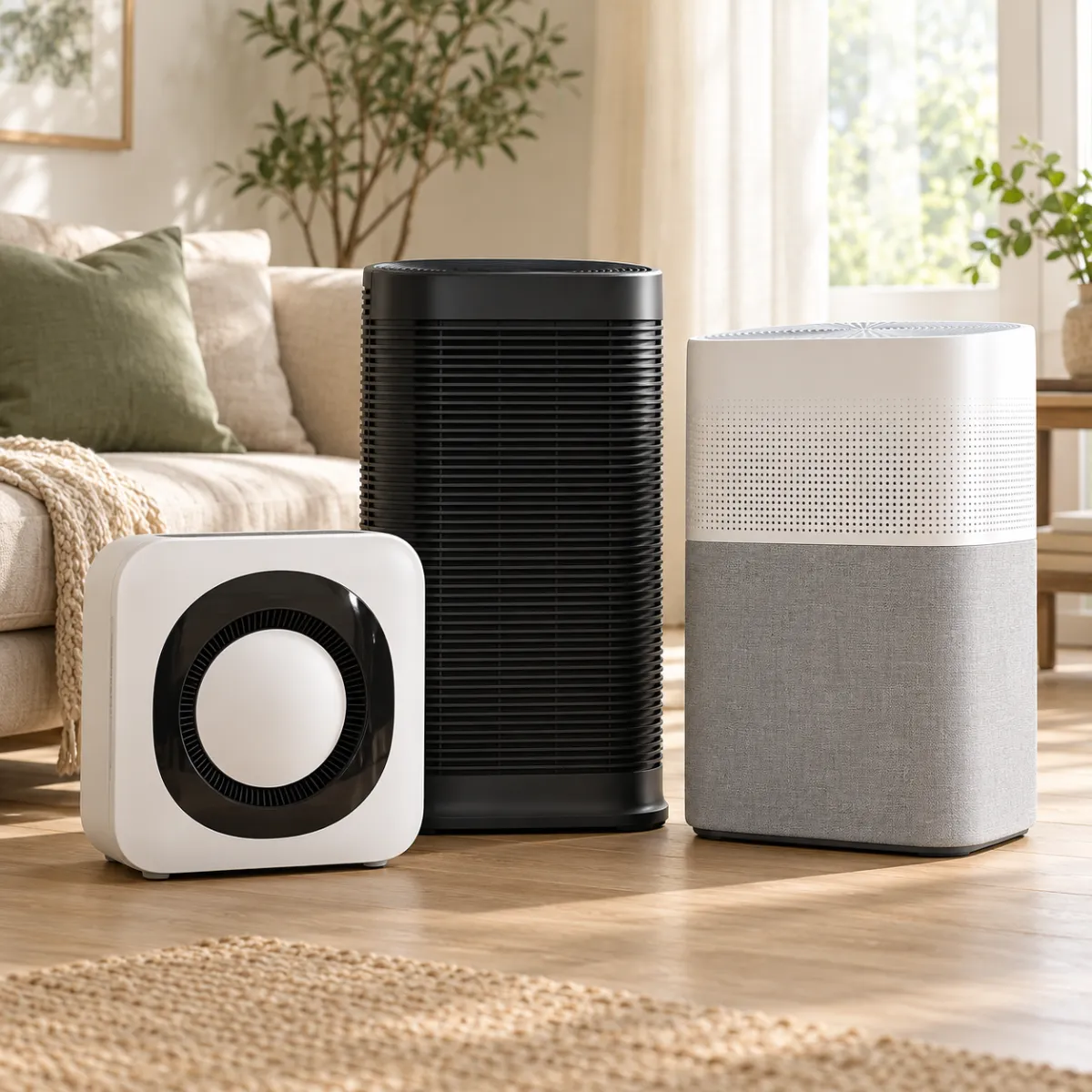
You don't need the most expensive machine, just the right one for your room and your trigger. For most people, the Coway Airmega AP-1512HH is the best air purifier for allergies. Big open room? Go with the Honeywell HPA300. Pets in the house? The Blueair Blue Pure 211i Max. Those three offer the best mix of coverage, quiet running and easy upkeep for most homes.

Coway Airmega AP-1512HH, Honeywell HPA300 and Blueair Blue Pure 211i Max grouped in a bright living room
Three recommended air purifiers together in a bright home

Prices change often, so check today's price and choose the one that fits your space.